Note: This article was originally published as an op-ed in Mar’s Hill Newspaper last year in light of the 2020 Presidential election in the States. Many of my personal views have shifted and morphed since then due to a critical deconstruction of political partisanship, however, much of my analysis of the ideologies of cultural cultivation remains a constant. I have not traveled back to the United States in nearly a year- contributing to a mixture of cultural detachment and numbing the sense of homesickness. Reflecting a year later on this piece I still have a plethora of unanswered questions regarding this issue and quite welcome both criticism and critique. I recognize my inherent bias and the experiences leading to these formed ideologies, however, my hope is a continual growth in knowledge and empathy.
In the children’s classic Peter Pan, Wendy, the story’s protagonist, asks a simple, yet profound question: “boy, why are you crying?” Similar to Peter Pan, this inquiry has left me unable to articulate the reason for my grief except that maybe, just maybe, it has to do with Neverland.
In the early 1900s, G.K. Chesterton critiqued the growing divide between institutionalized religion and English patriotism idealism, “The point is not that this world is too sad to love or too glad not to love; the point is that when you do love a thing, its gladness is a reason for loving it, and its sadness a reason for loving it more.”
The naivety of the Lost Boys parallels this narrative of the American patriot: one who examines their homeland through pixie dust-coated glasses. Patriotism has become a dirty word. However, this stems from a gross misinterpretation of the term properly contextualized. Patriotism is exposure to the naked truth: her flaws, scars, bruises, deformities, and her citizens choosing to stay and doctor her bloody wounds.
America is not a utopian Neverland––that has never been the goal. Try as we will, our bureaucratic limit is our own wretchedness.
America is not a utopian Neverland––that has never been the goal. Try as we will, our bureaucratic limit is our own wretchedness. In The Garden of Eden, Adam and Eve were commanded to cultivate their community, not abandon it. The underlying premise is this: we are residents of earth and citizens of heaven. Patriotism exists as another form of stewardship. In its proper context it is cultivating; bringing water to your community, tilling the soil around you, and bringing forth light and transparency to the garden.
French Diplomat, Alexis De Tocqueville observed in Democracy in America that America’s greatness is not found in her enlightenment, but rather in her ability to “repair her faults.” I am not blind to the sores that plague this country. It is an imperfect story tainted with injustice––it is history, not a fairy tale of faith, trust, and pixie dust.
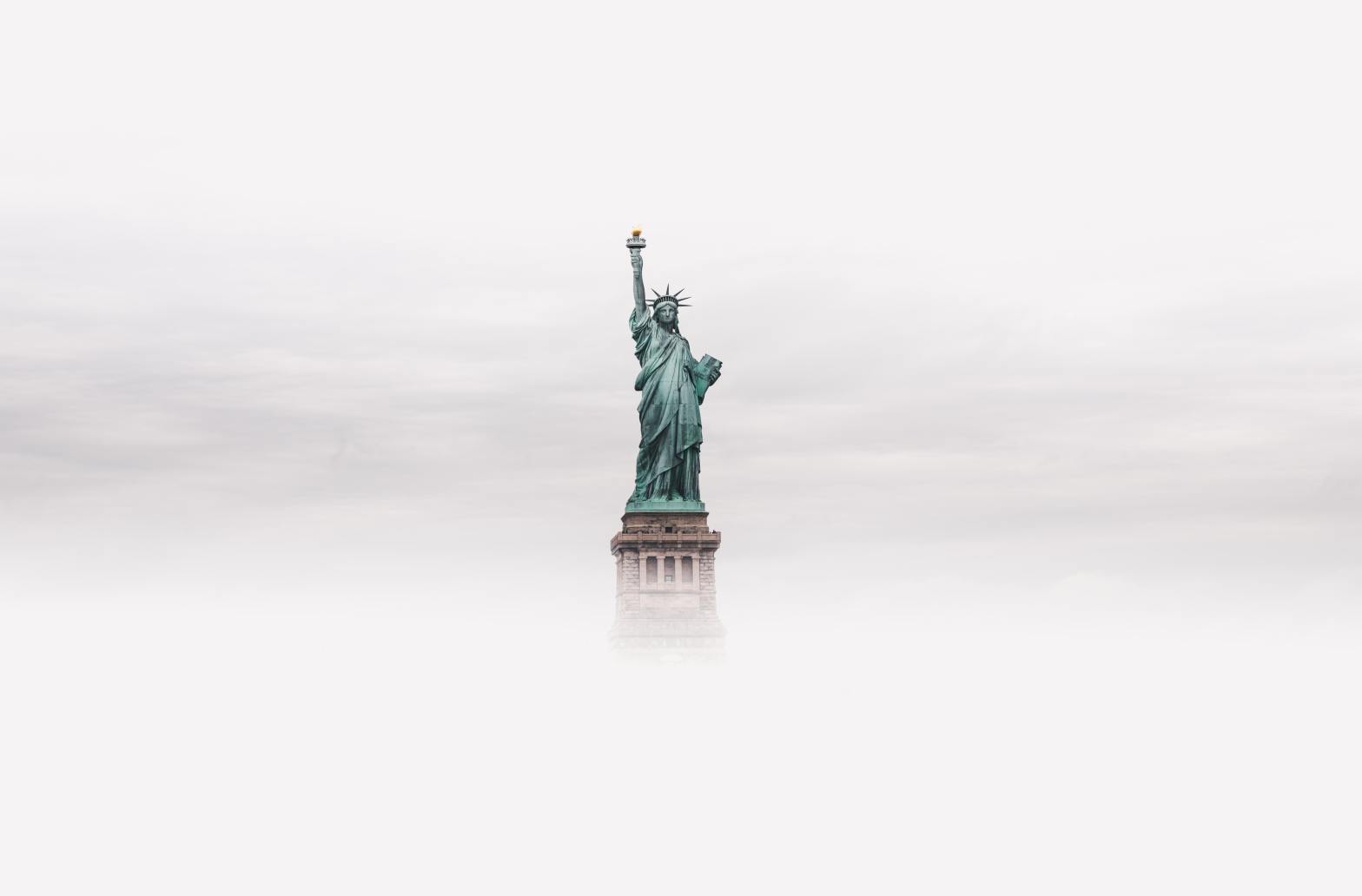
So, how did we get here? Lady Liberty, traditionally portrayed as a beacon of independence and hope, now looks like a ragged old showgirl. A friend of mine recently described the American election this way: “when it’s not your country, it’s like watching the neighbors get a divorce. But when you are American, it’s your parents that are divorcing.”
Neverland has morphed into the dystopian Lord of the Flies narrative, where the Lost Boys have started battling each other. Politics have become our god: we have sacrificed religion, relationship, and reason at the altar. No one person brought us here and no one person can lead us out, pitting politicians as neither angels nor demons––they are merely residents of Neverland.
We must stop pointing fingers. Stop blaming capitalism, patriarchy, the one percent, greedy corporations, media, Democrats, Republicans, Christians, and the atheists. The problem is not “them,” the issue is you and I. It is necessary to take social responsibility. After all, it is this blame game that destroyed Eden too.
I love my country because she is mine. I love her not because she is not faultless, but rather because she is full of faults yet still worth loving. As G.K. Chesterton wrote, “love is not blind; that is the last thing it is. Love is bound, and the more bound it is the less it is blind.” My soul aches at the current state of the union. In Peter Pan, we know Captain Hook is the villain, but in real life, it isn’t so clear.
In Peter Pan, we know Captain Hook is the villain, but in real life, it isn’t so clear.
This upcoming election is not a matter of good guys versus bad guys––there are heroic Lost Boys and mangey Pirates on both sides wearing thick masks of Red and Blue. We have lost the ability to see one another as anything other than enemies. We have erased humanity from “We the People.”
America is not a geographical location; it is the Lost Boys, the Captain Hooks, the Wendys, the Tinker Bells, and the Peter Pans. Very real fictional characters GPSing to heaven on earth: “second to the right and then straight on till morning.” And that is just it, The Great American Dicotmany.
Peter Pan believed in the magic of patriotic idealism; that Neverland is a grand oasis, a safe haven. Her birth preceded 1776, she was conceived deep in the souls of the Lost Boys and Girls who fought tyranny and built a nation. Neverland is great not because of who she is, but because of who loves her. Maybe it is not naivety, but rather the preservation of wonder. Peter Pan warned Wendy: “Even though you want to try to, never grow up.”
Neverland is great not because of who she is, but because of who loves her.
But, that is the tragedy, Wendy did grow up––she became old and grey. “In time [she] could not even fly after [her] hat. ‘Want of practice’, [she] called it; but what it really meant was that [she] no longer believed.” Wendy gave up on Neverland, the Fairies, the Lost Boys, and Peter Pan. Wendy still lived a good life, but not a grand one. She said goodbye, and goodbye as we know means forgetting. And that, if you must know, is why I am crying Wendy Darling because I am a Lost Boy feeling far away from Neverland and afraid that I will grow up like Wendy, and forget how to fly.
 Abigail Sefzik