
Introduction from my book, Crumbs From a Starving Artist.
The conception of this book began with my own personal ponderings regarding the dichotomy of the starving artist. As a recent university graduate entering the workforce, I spontaneously moved several thousand miles from a small town in British Columbia to the big city of Los Angeles. A bit starstruck and sunburned, I settled into my new life. Sunbathing, traffic jams, LA parking (if you know, you know), beach days, and overpriced lattes (overpriced everything, actually) ingrained themselves into the routine of my new life.
Perhaps it was the constant bombardment of materialism, the botox, fake boobs, or the “clout chasers”-either way, I felt out of place. My everyday narrative was plagued with a lust for meaning. As a result, I found myself entangled in the all-too-familiar paradox of living to work versus working to live. To make matters more confusing, anyone I asked about this quandary gave me thoughtfully convincing yet drastically different solutions. Through observation and conversation, I concluded that there are two distinct archetypes for the “starving artist”: the literal and the metaphoric.
- The Starving Artist
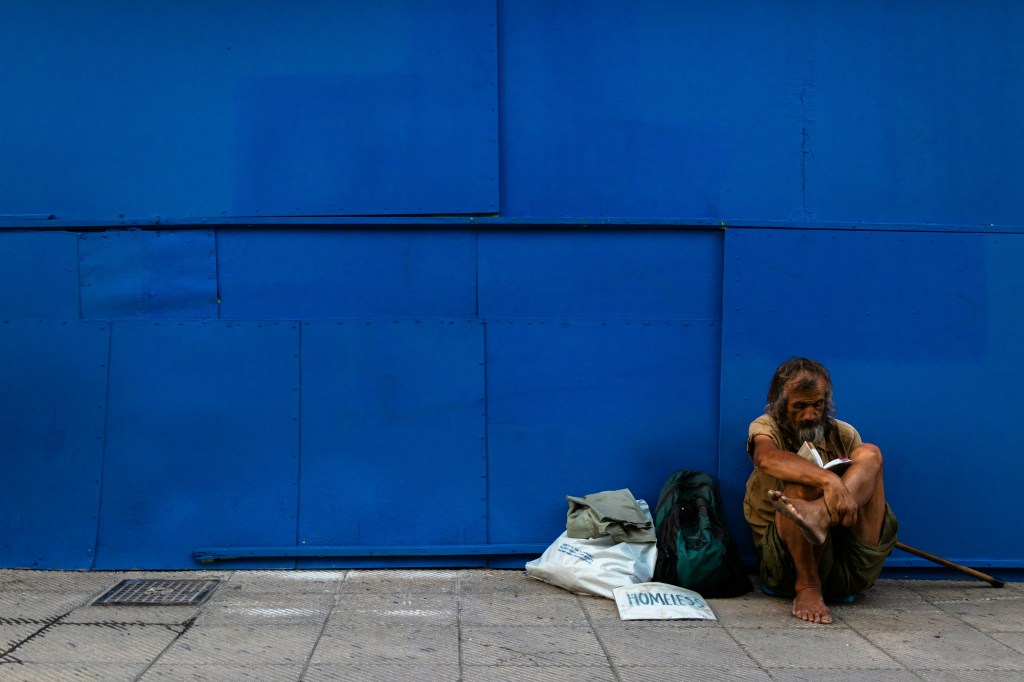
The first is the artist, who is, in the most literal sense of the word- starving. The romanticized trope of the starving artist is written into literature and portrayed in films. They are stereotypical characters who deprive themselves of material goods for the heroic sake of their art. They sacrifice the necessities of food and money on the altar of their creative vocation. The sole purpose of their existence is defined by their enlightened freedom to make art. Their identity is tangibly living their calling as a “creative”- regardless of whether or not that calling feeds their bellies or bank accounts.
- The Starved Artist
The second interpretation of the starving artist is the creative who has metaphorically starved themselves of art; they are the victim of a monotonous 9-5 routine. They are working a job to actively avoid becoming what society deems to be the literal starving artist. They unhappily feast off the harvests of corporate culture while their stomach growls for even a morsel of meaning. With money in their pockets and food in their bellies- they starve their inner artist by depriving themselves of meaning- finding themselves as just another cog in the wheel.
Both of these characters live a life of sacrifice; they intentionally starve themselves of either meaning or money. Admittedly, this is a dramatic portrayal of the extremes of both ends of the spectrum. In some cases, it is possible to have a balanced diet of both. Regardless, this existential tension exists within all of us. Remember how you used to answer when someone asked, “What do you want to be when you grow up?”
As children, we possess an inherent understanding of who we are. Only as time passes do we develop identity amnesia; we forget the simple yet profound euphoria of possibility, spending the rest of our lives endeavouring to rediscover who we knew we were in those early days. When asked what I wanted to be when I grew up, without hesitation, I would respond with, “I am a writer.” Back before I began to withhold food from my inner creative because feeding that dream isn’t practical, right?
That is why I wrote this book.
I wrote it for the bright-eyed, freckle-faced kid with a crown of messy golden-brown hair. A pen in hand, a heart of dreams and a notebook of stories before I was told to starve my artist. I write as a quiet rebellion to uncover art in the crumbs of everyday life. Through publicizing a piece of my soul, you will gaze through a window into the essence of who I am- in a work of naked, permanent vulnerability. My words are a mixing bowl of question marks and answers- and, above all else, a genuine pursuit of truth and authenticity.
So, with a hopeful heart, I offer you my soul on a platter of words, syllables, and grammar. These are my simple crumbs, feeble yet courageous appetizers to fill the aching belly of the artist. I welcome you to pull up a chair at the dining room table of my mind. I hope that as you feast, you not only consume my art but allow it to consume you. Taste these thought-provoking crumbs scraped off the table of the most mundane moments of everyday life, prepared to feed your starving artist.
 Abigail Sefzik
Leave a comment