To Not Losing Oneself Within Another’s Arms

In one of my all-time favourite comfort shows, Sex and the City, one of the main characters, Miranda, during brunch with her three best friends, in a moment of frustration, asks, “How does it happen that four smart women have nothing to talk about but boyfriends?”

As a woman in her late twenties, like Miranda, I have also felt the spoken and unspoken expectation to find a nice, stable man to “settle down with,” which has capitalized conversations, energy and time among my female friends. I have witnessed women around me complain about their singleness as though it’s a disease needing medical treatment. When did we stop being enough? How did our relationship status somehow close our eyes to the abundance of love within their lives, simply because it was not romantic in nature?

This feeling of somehow holding less inherent value as a human being because we are not attached to another human being (let alone a man) has significantly tainted our experience and fullness as women. Letting yourself be defined by a relationship misplaces the compass that directs us to authentic love. Simone de Beauvoir argued that, “One is not born, but rather becomes, a woman.” In this becoming, we have allowed our lust for “love” to interfere with our unfolding.

Love, in its truest form, does not ask for the erasure of the self—it asks for its flourishing. The danger lies in forgetting that you are already whole before another enters your life. The desperate search for wholeness is not found within the arms of another, but it is seen by realizing your hands are your own, made to remain open, not in the white knuckle grip of someone else’s. When one becomes so consumed by another that they vanish into them, love becomes dependency, and the soul, once expansive, begins to shrink. The self must remain intact, rooted in its own purpose, values, and dreams. In this way, love does not eclipse one’s identity but enhances it. A few years ago, I was heartbroken, battling the storms of disappointment and betrayal, alone in a new city. Through teary eyes and aching loneliness, I found comfort in the words of modern-day philosopher bell hooks: “When we see love as the will to nurture our own and another’s spiritual growth, it becomes clear that we cannot claim to love if we are destroying ourselves in the process.” I have been guilty of losing myself within another’s storms, losing sight of my own sunny skies. I say all this not to devalue the sacredness and essentiality of love in our lives, but rather to emphasize its importance with a caveat: romantic love is not the ultimate goal. But instead, the gentle consistency of friendship and solitude is where we build a foundation for what it means to be truly known, valued and most importantly, loved.

So, my dear sisters and friends. I hope and pray that you can discover the fullness within yourself. You are complete. Embrace the love within your life in all its forms. As Seneca wrote in his Letters to Lucilius, “Si vis amari, ama.”

“If you wish to be loved, love.”

Working With A Dying Man

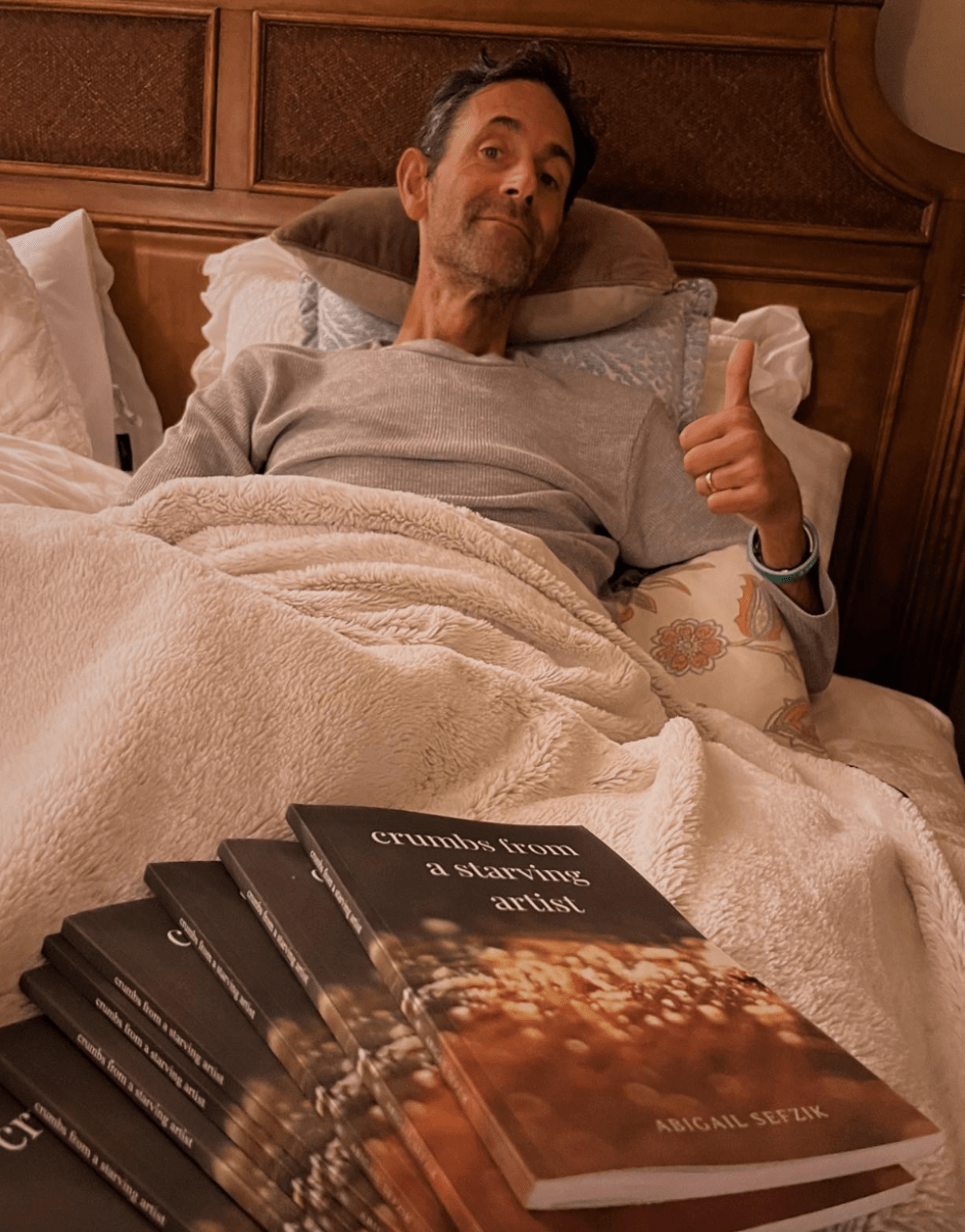
Today marks two years since Papa’s passing. I recently rediscovered these musings in my Google Drafts. I wrote them while employed at IEC and bits and pieces after his passing. He often told me that he wanted me to write about my experience working with him (very Jan of him). “You could call it Working With a Dying Man!” After he would make a comment that he found particularly profound or insightful, he would tell me, “You can put that in your article” or “Write that down.” However, whenever I sat down to write, I felt the words and syllables could not contain the essence of everything he was and still is. How do you even begin to describe Jan Cespedes? While not my biological father, he took me under his wing and provided me with love and affection as though I was. He somehow ingrained himself into my heart as “Papa.”  I still find myself hoping I’ve made him proud or think of him when I see a unique plant, knowing he could identify it.

He was also a foundational influence in encouraging my love of writing, pushing me to publish my book, and inspiring a belief in myself and my abilities. It was my most profound honour for him to live to listen to my first book. While he heavily doubted my landscaping skills, he never once doubted me. This gift of writing he helped to foster is the only gift I know how to give back to each of you. Even though my attempts to express my gratitude or memories of Jan will never feel good enough- one thing I learned from him was the importance of just going for it with as much enthusiasm as possible, so I wanted to offer you a simple compilation of memories. It’s not perfect, but few things in life rarely are.

“This must be weird for you.”

I tentatively glanced at him as I removed the mini fridge’s radiation-riddled contents with gloved hands into a large black garbage bag. 

“What do you mean?”

I asked with a hint of understanding in my expression but required further clarification, as I had learned to do with Papa. He often left his communication purposely vague and mysterious for dramatic effect.

His no-subject emails or elusive one-word text messages often contained hieroglyphics such as: 

“???”

Or

“.”

Or 

“!!!!”

Or perhaps a combination of all three:

“!?.???!?..”

Then, it was up to the receiver to translate such symbols’ urgency and meaning. I quickly learned that translating his written communication was quite a skill, and I found myself outsourcing screenshots to family members to understand this foreign language. Surprisingly, I discovered almost anything could be communicated within those three characters(!?.)

Now he sat on the edge of his bed, resting his elbows on his knees and shifting to take a rickety breath through his fatigued lungs- eyes staring straight ahead. 

“This must be weird for you.”

I tentatively glanced at him as I removed the mini fridge’s radiation-riddled contents with gloved hands into a large black garbage bag. 

“What do you mean?”

I asked with a hint of understanding in my expression but required further clarification, as I had learned to do with Papa. He often left his communication purposely vague and mysterious for dramatic effect.

His no-subject emails or elusive one-word text messages often contained hieroglyphics such as: 

“???”

Or

“.”

Or 

“!!!!”

Or perhaps a combination of all three:

“!?.???!?..”

Then, it was up to the receiver to translate such symbols’ urgency and meaning. I quickly learned that translating his written communication was quite a skill, and I found myself outsourcing screenshots to family members to understand this foreign language. Surprisingly, I discovered almost anything could be communicated within those three characters(!?.)

Now he sat on the edge of his bed, resting his elbows on his knees and shifting to take a rickety breath through his fatigued lungs- eyes staring straight ahead. 

“It must be weird for you to watch me die.”

In the year to follow, for some reason, this simple conversation ingrained itself deep into the consciousness of my mind, foreshadowing what inevitably was to come and the mirage of grief and memories that would linger behind. He was right; I did just that: watch him die, but more importantly, for a tiny sliver of eternity, I watched him live. His existence was a testimony not to expect anything less than an extraordinary life. Adventure followed him like a moth to a flame. Each ordinary day morphed into one brimming with possibility. Perhaps his perspective was rooted in the sobering awareness of the brevity of life. I was often struck by the candidness with which he spoke about death. It wasn’t taboo but rather an impending reality.

There was no tiptoeing or euphemisms but rather a directness that I grew to appreciate. I become overwhelmed by the realization that the only difference between him and the rest of us is he knew he had a timeline, but the reality is death is unavoidable. He mastered the art of savouring the shortness of life, squeezing out every ounce of joy possible. When his health steadily declined, I would spend time with him (in the name of “work”) at the first beach apartment, completing small tasks he would give me, listening to his endless stories and sharing meals. These mundane moments are now ones I replay and cherish. He often asked me not to make him laugh because it hurt his lungs, and then he would laugh anyway. And scold me each time. The act of laughing through his pain was his simple rebellion. He taught me that your legacy is less about you than about leaving something meaningful for those you leave behind you. Everything he did was for his family- the people he brought into the world courageously guided him out of it. The day he passed, in the shocked stillness, Momma hugged me and whispered in my ear, “Never stop talking about him.” So I wanted to do just that in reliving an ordinary day in his extraordinary life…

One of Papa’s many trademarks was his love of walking, whether one block or one mile- you could count on him getting his steps in. It was on one of these particular walks that by the time Giana, Jan and I had gotten back to the house, he had found us both husbands (by that, I mean he had catcalled some poor construction workers on the street as Giana stood mortified) and found me a job.  Somehow, within the period of leaving the house and returning home, I was hired as his “personal assistant at his landscaping company.” My job description was- well, quite vague. No work week was the same. One day, I would respond to emails and make phone calls in the office; the next, I would shoot bows and arrows, wrangle goats, hit golf balls, learn (with a thick “gringa” accent) Spanish, and ride a four-wheeler on the ranch. Despite the lack of structure, it quickly became a job where I got a front-row seat to Jan Cespedes’s extraordinary life. (Spoiler alert: I quit.) Even so, Jan remained more than just my hefe but a father figure and mentor. He would lovingly refer to me as his “favourite white girl,” I would beam with pride as he claimed me as his 6th daughter.

The day before his last radiation treatment, we spent the day “working” at the ranch office- at the beginning of the day, he presented me with a lengthy 23-point to-do list. It was a jumble of vague phrases and words followed by several combinations of “???” and “!!!” at the end of specific tasks. Midway through the day, we had checked off 3 out of the 23 boxes on the paper.  One of my tasks was to watch YouTube videos of a specific Bobcat mower, which I completed against my will (to this day, I’m still not quite sure of the purpose). He found it much more interesting than I did as he giddily watched over my shoulder, making animated sounds as brush and trees were crushed by this miracle machine.

As his assistant, I took my role very seriously, and like any good employee, I often had to keep Jan on task. Beginning to feel like a prisoner, I couldn’t stand being forced to watch another obscure machinery YouTube video against my will; I held up my to-do list and pointed at it,

“Come on, we got things to do.”

He turned up his chin, let out a classic Jan laugh, and raised his hand, swatting away my anxiety with his Cuban flair,

“Put that down and live a little bit. There is more to life than to-do lists.”

And so, the rest of the evening, Bri, Giana, Ellie, Papa, and I sat in makeshift chairs as we drank contraband coronas (snuck in by Bri) and smoked Cuban cigars (let the record state that Ellie did not partake in either). We laughed, teased, and prayed, and I listened, smiling ear to ear as father and daughters retold stories and shared hopes underneath the vast Southern California sky as it faded from clear blue to dusty hues of pink and orange. The sunset reminded us that nothing in nature is stagnant; everything constantly shifts and changes as dusk engulfed us in the cool darkness. As I reflect on the memory two years later, that is how I remember Papa: laughing, teasing, praying and retelling stories, surrounded by the people who loved him most as he transitioned from daybreak into the darkness. Unafraid. We do not fear the night because we know the sun will rise again. I am sure that if God allows Coronas and Cuban cigars in heaven (if not, Bri will have to sneak some in), he’s enjoying them even more there than he ever did here (I have no Biblical evidence for this, but I am positive that there will not be lawn mower videos in heaven). And while we will still exist on this side of eternity, we cling to the audacious hope that when each of our sunsets fades into the bright hues of eternity, we will all be together again, daughters, sons and the Father in perfect unity, laughing, teasing, praying, retelling stories, smiling ear to ear.

Memaw’s Closet

In memory of Pansy Anderson

It’s an odd thing to pave the road for someone who is about to die, the sterile logistics of losing a loved one. You make funeral arrangements like calling a restaurant for a dinner reservation. You discuss cremation or burial, like asking a friend which dress looks better before a night out. Even with the impending weight of grief on your shoulders, you simply do the next thing, not because you want to or because you are strong, but frankly, because death leaves you with no other options. Forward is the only path to take.

These were the sorts of reflections my mind drowsily soaked in as I sat cross-legged on the floor of my dying Memaw’s spare room, sifting and sorting through quite literally all of her earthly belongings. The purpose of this gleaning was to prepare her for moving into into a care home, the natural consequence of longer being able to care for herself, the next stop on the bus to The End. Isn’t it strange how all the evidence of someone’s existence can be confined to a single room? Eighty years of glittery gizmos and gadgets of plenty, all this stuff isn’t so neat when the reality is it can’t even come with her- to the care home or to what lay after.

I submerged myself into the ocean of her past; each box, pile and folder built a bridge to the woman whose blood runs through my veins. Like a pirate searching for treasure, I flipped through old photographs, tattered and torn. Some pictures were posed, others candid snapshots of memorably mundane moments. While in some, I recognized past versions of myself, my grandfather, brothers, cousins, uncle, aunt and parents, other faces were strangers to me—yet friends to her. I smiled, letting my imagination hear the sounds of pleasant chatter, the smell of neighborhood BBQs, and the salty South Carolina beach air. I wondered where all these people were now. Did they find love? Did they experience loss? Did they discover happiness? Did they have their own granddaughter who, at this very moment, was somewhere else in the world, also flipping through photos and asking the same questions? 

Amidst the montage of both familiar and strange faces, the main character remained—her, my Memaw, Pansy Anderson. She glowed with a halo of bleach-blonde hair, crimson lips, and enough sunny dreams to fuel an entire Telsa factory. She was striking—Marilyn Monroe with a Southern twist. She brought colour into any space she set a Louis Vuitton foot in, literally and figuratively; each house turned home, adorned with vibrant colours and elaborate decor. A pang of sorrow reverberated throughout the caverns of my heart, sobering my intoxicating nostalgia as I thought about the now fragile skeleton medicated in her bed- the opaque shadow of who this kaleidoscope of a woman used to be. Smooth skin patched and blistered, golden curls gray and brittle, melodious voice drowned by fluid filled lungs- ripe dreams turned rotten on the vine of time. The hands of the ticking clock are greedy, leaving no survivors. Growing up is scary but growing old, now that is more terrifying than death itself.

Today. I’m thousands of miles away from that stuffy room in East Texas, yet no closer to unraveling the paradoxes of growing up and growing old. My Memaw has been gone for over a year now. She quite literally fought until the bitter end, but despite Pansy Anderson being the most stubborn woman I’ve ever known, I like to think that when Death came to visit her that afternoon in late August, for the first time in her life, she didn’t put up a fight; but instead, she willingly took It’s hand and let it gently lead her to a place where she finally felt a sensation entirely unfamiliar to her: peace. The sufferings of her finite existence shattered in the wake of eternity. As we shed tears, she shed the confines of her mortality, a body that had been both her biggest pride and greatest pain in equal measure. Now, the garden of her legacy is cultivated by the generations- not the things she left behind. She was wonderful in her own unique way that only she could be-yet she was a deeply flawed woman- so incredibly and imperfectly human. Her life contained decisions of profound good and bad, but I do not think the measure of a good life is the total sum of someone’s deeds. But rather, her mistakes were a playbook for those willing to listen and learn. In her youth, she witnessed the sunrise of my beginning; in my youth, I’m thankful to have witnessed the sunset of her end. 

While growing up is still daunting, growing old is less so. Because, after all, the impending weight of mortality on your shoulder doesn’t grow lighter, only slightly more familiar. You must simply do the next thing, not because you want to or because you are strong, but frankly because life leaves you with no other options. Forward is the only path to take.

The Dichotomy of the Starving Artist

Introduction from my book, Crumbs From a Starving Artist.

The conception of this book began with my own personal ponderings regarding the dichotomy of the starving artist. As a recent university graduate entering the workforce, I spontaneously moved several thousand miles from a small town in British Columbia to the big city of Los Angeles. A bit starstruck and sunburned, I settled into my new life. Sunbathing, traffic jams, LA parking (if you know, you know), beach days, and overpriced lattes (overpriced everything, actually) ingrained themselves into the routine of my new life. 

Perhaps it was the constant bombardment of materialism, the botox,  fake boobs, or the “clout chasers”-either way, I felt out of place. My everyday narrative was plagued with a lust for meaning. As a result, I found myself entangled in the all-too-familiar paradox of living to work versus working to live. To make matters more confusing, anyone I asked about this quandary gave me thoughtfully convincing yet drastically different solutions. Through observation and conversation, I concluded that there are two distinct archetypes for the “starving artist”: the literal and the metaphoric. 

  1. The Starving Artist

The first is the artist, who is, in the most literal sense of the word- starving.  The romanticized trope of the starving artist is written into literature and portrayed in films. They are stereotypical characters who deprive themselves of material goods for the heroic sake of their art. They sacrifice the necessities of food and money on the altar of their creative vocation. The sole purpose of their existence is defined by their enlightened freedom to make art. Their identity is tangibly living their calling as a “creative”- regardless of whether or not that calling feeds their bellies or bank accounts.

  1. The Starved Artist

The second interpretation of the starving artist is the creative who has metaphorically starved themselves of art; they are the victim of a monotonous 9-5 routine. They are working a job to actively avoid becoming what society deems to be the literal starving artist. They unhappily feast off the harvests of corporate culture while their stomach growls for even a morsel of meaning. With money in their pockets and food in their bellies- they starve their inner artist by depriving themselves of meaning- finding themselves as just another cog in the wheel. 

Both of these characters live a life of sacrifice; they intentionally starve themselves of either meaning or money. Admittedly, this is a dramatic portrayal of the extremes of both ends of the spectrum. In some cases, it is possible to have a balanced diet of both. Regardless, this existential tension exists within all of us. Remember how you used to answer when someone asked, “What do you want to be when you grow up?”

  As children, we possess an inherent understanding of who we are. Only as time passes do we develop identity amnesia; we forget the simple yet profound euphoria of possibility, spending the rest of our lives endeavouring to rediscover who we knew we were in those early days. When asked what I wanted to be when I grew up, without hesitation, I would respond with, “I am a writer.” Back before I began to withhold food from my inner creative because feeding that dream isn’t practical, right?

That is why I wrote this book. 

I wrote it for the bright-eyed, freckle-faced kid with a crown of messy golden-brown hair.  A pen in hand, a heart of dreams and a notebook of stories before I was told to starve my artist. I write as a quiet rebellion to uncover art in the crumbs of everyday life. Through publicizing a piece of my soul, you will gaze through a window into the essence of who I am- in a work of naked, permanent vulnerability. My words are a mixing bowl of question marks and answers- and, above all else, a genuine pursuit of truth and authenticity.

So, with a hopeful heart, I offer you my soul on a platter of words, syllables, and grammar. These are my simple crumbs, feeble yet courageous appetizers to fill the aching belly of the artist. I welcome you to pull up a chair at the dining room table of my mind. I hope that as you feast, you not only consume my art but allow it to consume you. Taste these thought-provoking crumbs scraped off the table of the most mundane moments of everyday life, prepared to feed your starving artist.

The Philosophy of Self- Love

Since the inception of human consciousness, psychologists and philosophers have analyzed the etymology of Self. Meanwhile, the job of attempting to explain the meaning of Love has been delegated to the poets and musicians. Yet still, contemporary society holds deeply convoluted theories of self-love: shallow selfie feeds, bubble baths, and shopping sprees with a #selflove caption. “Self-love” has become nothing more than a narcissistic buzzword containing ingredients of murky definitions and vague directions. However, despite the lack of understanding surrounding the implications of this word, when someone declares they are practicing the art of self-love, it is hounded by empty applause and meaningless validation. To adequately exercise “self-love,” one must possess a core understanding of two foundational concepts:

1. Self 

2. Love

A familiar adage states, “It’s about the journey, not the destination.” But how can we observe the road to self-discovery without headlights? Despite trendy performances, the GPS routing us to self-discovery informs us we are lost—far from the destination of understanding Love or Ourselves.

We do not understand Love because we do not know ourselves.

We do not understand ourselves because we do not know Love.

The words nosce te Ipsum (know thyself) were inscribed in the ancient Temple of Apollo in Delphi. This phrase has had infinite applications throughout history in various cultures, including the Socratic dialogues of Plato and Xenophon. This philosophy is a central pillar in Socratic dialogue and reasoning; understanding oneself—one’s ignorance, desires, and motivations—is the essence of pursuing a life of truth and virtue.

Socrates proposes a subtle yet consequential twist in the interpretation: he replaces “know thyself” with “see thyself.” This refers to the capability to examine one’s soul introspectively and objectively by studying the state of one’s inner moral and intellectual condition. His beliefs about the soul were strictly dualist, believing the soul and body were distinctly separate- the soul eternal and the body temporary. While Socrates’s systematic theology is unclear, he does acknowledge the significance of the role of the Divine. He refers to his Daimonion, his inner divine voice guiding his thoughts and decisions. While not exactly the same, this sentiment is similar to the Christian belief that the Holy Spirit resides in the souls of believers, directing and providing a moral conscience.

Either way, regardless of your religious ideologies, it is crucial to acknowledge and, at the very least, tip your hat to the role that the belief in the Divine has played throughout history and philosophy.  

The quest to comprehend the Self is capitulating that the soul is the guiding force for the essence of the Self. Man’s ability to understand the Divine is discovered in the components of one’s very soul, specifically, the region of the soul that “resembles the Divine,” as Socrates asserts. When one understands God, one begins to understand the Self, and the more intimately one grasps the Self, the more one can conceptualize God. 

While I still believe that poets and musicians are best suited to explaining love, philosophers can provide some insight. However, no widely accepted definition of love or self-love is found in philosophy or psychology textbooks. It has been consistently debated whether self-love is intrinsically selfish or essential. However, if we have contented ourselves with the fact that the Self is inexplicably linked to the soul, the inquiry is now: What is soul love?

Aristotle in Nicomachean Ethics, assembles a clear distinction between a lover of Self and self-love. A man who is a lover of Self is “…when they assign to themselves the larger share of money, honors, or bodily pleasures…” This concept correlates directly with Socrates’ dualistic approach, which states that the needs of the soul and body are distant. He later proposes that self-love is not selfish but vital for pursuing a life of goodness. He defines self-love as discovering what is virtuous for one’s soul for the sake of the common good.

This starkly contrasts our current egocentric trends, which manipulate us into settling for a counterfeit version of the sacred self-love ritual. Winston Churchill wrote in Orthodoxy that Love is not blind, but instead Love is bound. Soul love is not an inflated view of ourselves- but rather an accurate one. The union of Self and Love is the proper cultivation and objective view of one’s soul; it is a spiritual comprehension of the reality and needs of our soul and its relationship with the Divine. 

The mirror we hold up to our Soul should reflect both the chasm of our own wickedness and the depth of our commitment to redemption by the Divine—only then can we begin to practice self-love.

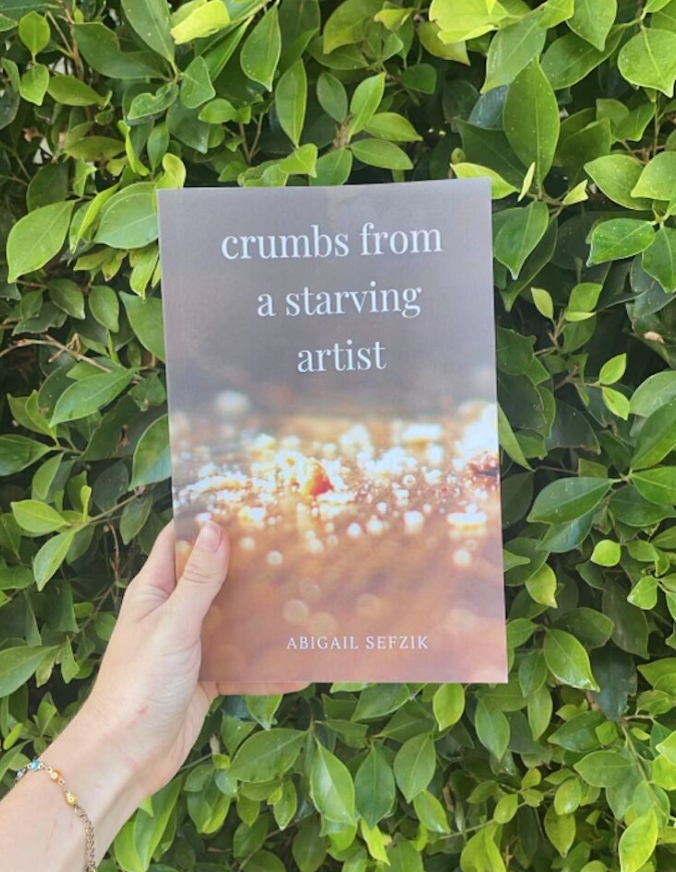
Crumbs From a Starving Artist

By Abigail Sefzik

Crumbs From a Starving Artist is a literary collection of poetry and philosophical essays highlighting some of the most ordinary of life’s moments. It is revealing the everyday magic behind them. It’s an insightful look into the dichotomy of the starving artist.

Order your own copy here!

From the bottom of my heart- thank you to everyone that believed in me.

This is for you.

I wrote this book for the bright-eyed, freckle-faced kid with a crown of messy golden-brown hair, a pen and a notebook in hand, and a heart full of dreams before I was told to starve my artist.

I write as a quiet rebellion to uncover art in the crumbs of everyday life. Through publicizing a piece of my soul, you will gaze through a window into the very essence of who I am- in a work of naked, permanent vulnerability.

My words are a mixing bowl of question marks and answers- and above all else, a genuine pursuit of truth and authenticity.
So, with a hopeful heart, I offer you, my very soul, on a platter of words, syllables, and grammar.

These are my simple crumbs, feeble yet courageous appetizers to fill the aching belly of the artist. I welcome you to pull up a chair at the dining room table of my mind. I hope that as you feast, you not only consume my art, but- you allow it to consume you.
Taste these thought-provoking crumbs scraped off the table of the most mundane moments of everyday life prepared to feed your starving artist. “

The Protection of Pluralism Within Canadian Society

Introduction

Politics and religion are two of the most critical aspects of our lives, and yet we feel the inherent need to purge both topics from dinner table conversations and our everyday social interactions. There has been an inflated feeling of continual polarization founded on the role of church and state in Canada. History proves time and time again that veering too far to either side undermines principles of a liberal democracy and religious freedom, constructing deep-set and lasting consequences. While challenging to have, discussion regarding this particular topic is crucial to embracing diversity and individual liberties, and various perspectives.

I want to examine the social implications and legal ramifications of Quebec’s Bill 21: An Act Respecting the Laicity of the State.1 We will discuss the historical influences of pluralism within Canadian society, the current challenges of Bill-21, and insights into several judicial protections of religious freedom. 

Executive Summary 

Trial and error have given birth to a myriad of political theories and religious ideologies regarding the role of the Church and State all across the globe. Much contemplation and investigation have caused me to wrestle with religion’s role within society. Part of my reasoning behind writing this was based on a deep curiosity regarding the purpose and function of religion within a liberal democratic government. 

Prior to living in Canada, I grew up in the Southern United States where God and government ruled side by side, intercommunicating on a throne of equality. While the American Constitution lays out explicit (with a plethora of caveats) protections of religious freedoms, the US also does not shy away from using religiously charged statements in the public sphere, such as “In God we trust” 2 or “One nation under God”.3 While Canada may not have the same First Amendment rights I had grown accustomed to, its Charter of Rights and Freedoms lays the foundation for religious freedoms within Canada. There is value to be found in both countries’ approaches, and I believe discovering a middle ground between them would most effectively protect religious freedoms.

 John Locke, deemed the “Father of Liberalism”, laid the foundation for pluralism in the late 1600s with his social contract theory presented in his piece: Two Treatises of Government. Prominent modern ideologies can be traced back to Locke’s philosophy, namely, that individuals must sacrifice certain rights for the sake of the social good.4 The tension of individual rights within the broader context of cultural cooperation has dominated the political and social discourse of the 20th century. The World Wars significantly shaped the narrative of pluralism within Western democracies. At the same time, National socialism and global communism have left deep, lasting scars in the flesh of countries across the globe. 5 

Western democracies largely operate within the context of pluralism, assuming an attitude of tolerance, and enforcing the ideology of coexistence. Pluralism directly influences the way Canadians are expected to operate in the realms of both their civic duties and religious freedoms. This mindset extends into the realm of culture, religion, and lifestyle choices; it is reflected in our laws and how we are expected to interact with others as civil members of a democratic society.    

Pluralism is also embraced within the spheres of government through the separation of church and state. Through this particular lens, the role of government is to govern its citizens by maintaining order in the public arena, while the role of religion is to promote private spiritual practices to enhance human flourishing.  

Initially, the notion of church and state functioning as separate entities was merely “assumed” in the public square; the understanding that Canada operated within the context of a secular state seemed obvious. As David Koussens writes in Nationalistic Secularism and the Critique of Canadian Multiculturalism in Quebec, “Canada nor any of its provinces had ever enacted a law explicitly separating church from state, nor had they formally proclaimed secularism in a constitutional text.” 6

It wasn’t until the mid-’90s that conversations encompassing pluralism were brought into public dialogue in Canada. The initial cause of this debate was originally sparked by a student who was expelled from his public school for wearing a hijab to his class. This case resulted in a report produced by the Commission des droits de la personne et des droits de la jeunesse du Québec that urged for legal safeguards regarding the allowance for individuals to wear religious symbols in public spaces. Not long after, the Supreme Court ruled in favor of a Sikh Royal Canadian Mounted Police officer in 1995, affirming he could wear a turban in his place of work.  

Perhaps the most significant legal decision continuing the conversation of pluralism is Big M Drug Mart, where the Supreme Court emphasized the importance of “individual conscience and individual judgment” within the context of Canadian society, saying this lies at “the heart of our democratic political tradition.”

Despite legal precedence, Quebec passed Bill 21 in 2019 with the intended purpose of “affirm[ing] the laicity of the State” by further separating the functions of church and state, ensuring religious neutrality by prohibiting individuals from “wearing religious symbols in the exercise of their functions”, effectively undoing much of the work done to protect religious freedoms. 

Worldview is the driving force behind culture, politics, and religion; it’s an inescapable reality. The Golden Rule is a broadly accepted ethical standard for how individuals should interact communally, stating to “treat others the way you would like to be treated”. This principle manifests itself not only in personal undertakings- but also in how we practice public policy. It is this rule that lays the foundation for tolerance and pluralism; citizens of democratic countries tolerate differences and disagreement so that the same tolerance is extended to them. 

As previously established, the majority of Westernized liberal democracies primarily function on principles of pluralism and reasonable tolerance. It is important to note that the basis of religious and cultural pluralism is not about truth and falsehood but rather about perceived truths and falsehoods. Pluralism establishes a sense of ideological immunity operating on the understanding that religious belief is a private matter. In a pluralist society, we do not ask whether or not the religion that the individual holds is true; instead, the hallmark of religion is rooted in the sincerity of the individual’s belief. Thus, it safeguards the individual’s right to a worldview and the practice of spirituality.

While pluralism lays an ideological foundation for a separation between the church and state, in practical terms, one must acknowledge that religion dramatically impacts an individual’s relationships with persons, work, and government. Although, admittedly, private religion is technically separate from the public sphere, however, it still dictates the various aspects of how individuals interact within the public sphere. 

One must also acknowledge the lasting impacts of religion within society- both positive and negative. Each functioning society operates with a basic sense of shared values and expectations. The worldview of Canada has long been established as a secular country subject to the Crown, while there is no official state religion. While there are notable exceptions, most Westernized governments operate through the lens of both Judeo-Christian values and reasoned morals produced by the Enlightenment. 

Totalitarian authoritative regimes such as the North Korean government or Communist Russia act as aggressive examples of what happens when there is no separation between the church and the state- a haunting historical track record reveals that the government becomes God. And as a result, it becomes an all-powerful, all-knowing, sinless authority worthy of respect and worship. The government by default, defines moral right and wrong.

There are various approaches to how church and state should be divided. None of which includes banning or punishing individuals for practicing their inalienable right to hold a set of belief systems. Canadian Think Tank Cardus produced a research report, Protecting Freedom of Conscience, focusing on protecting conscience rights within our society. They not only communicate the extensive social necessity of tolerance but also caution against statutory interference, “State action that compels a citizen to do something that violates her conscience or face some sort of adverse consequence is a severe breach of freedom of conscience.”

This can be contrasted with US policies which blatantly allow for religion to be brought up in official contexts. There is a case to be made that enabling religious statements to infiltrate legal documents, tender, and laws undermine religious freedom by allowing the government to push a religious ideology onto its constituents. 

Bill 21 has sparked robust controversy, especially among cultural and religious minority groups such as Muslims, who comprise 3.2% of the total Canadian population, followed by Sikhs, who account for 1.4% of the census. On May 6th of 2021, the National Council of Canadian Muslims (NCCM) and the Canadian Civil Liberties Association (CCLA) announced their intention to challenge Bill 21 on the grounds of religious freedom. 

The majority of these challenges were posed in light of pre-existing documents such as Quebec’s Charter of Human Rights and Freedoms along with the Canadian Charter of Rights and Freedoms, which provide a holistic understanding of human rights, especially in the context of religious freedom and pluralism within Canada. 

As it stands today, Bill 21 not only holds legal authority within the province of Quebec but also sets a dangerous precedent across the country in matters of freedom of conscience. Sonia Smith writes that “A Canadian court has largely upheld a controversial Quebec law barring civil servants in positions of “authority” from wearing religious symbols at work.” While Quebec’s attempt to separate church and state is likely well-intentioned, banning religion from the public sphere has resulted in a myriad of unintended consequences that ultimately target certain religious minorities rather than protect them.

Before examining the specific issues presented within Bill 21 it is crucial to establish the difference between legislation that explicitly prohibits individuals from publically expressing their faith and laws that merely limit certain religious activities. The latter instance is quite tricky to navigate because legislation can by consequence, indirectly impact individual sovereignty. The Oakes Test has traditionally employed four elements to determine whether or not there can be limits on religious freedom from the courts: substantial objective, rational connection, minimal impairment, and final balancing.

Those standards are nuanced and can be justified personally. However, Quebec’s Bill 21 explicitly prohibits religion from the public square- not simply limiting it. As a consequence, the government, by default, acts as a moral and ethical judge, jury, and executioner for what ideas are allowed. Secularism is a worldview. One might even argue that it constitutes a religion itself. This premise makes Bill 21 dangerous because it doesn’t promote tolerance but rather forces secularism into the government. 

Lawmakers should avoid enacting policies that dictate how individuals and businesses are permitted to interact with ideologies they ethically disagree with–right or wrong. Our role in a democratic society should be to keep governing authorities accountable on two accounts: protection and prohibiting. The legal protection of individual charter rights and blocking laws that prohibit the freedom to exercise those rights. It is a dangerous precedent for legislation to determine individual morality.

As we previously discussed, the underlying philosophy backing pluralism operates on the notion that we do not ask whether or not the religion that the individual holds is true but rather the degree of their sincerity about their belief. By banning religion from the public square, Quebecs’ bill 21 takes an objective stance on truth. In order to preserve the rights of the individual, Canada needs to delineate between the individual’s personal actions and those they carry out on behalf of a role they hold in the public square. For example, there is a world of difference between a public school teacher wearing a hijab to work versus forcing students to pray to a deity in a public classroom. The former is a personal action, while the latter uses a public role for religious ends, at the expense of the student’s religious beliefs. 

It’s paramount that provincial legislatures and Parliament fulfill their duties to protect their citizens by protecting religious rights without prohibiting religious freedom from the public square.

Legal safeguards have long been established by the legislative as a cornerstone for protecting pluralism within a liberal democracy. As previously established, the courts have recognized the importance of individual, societal, and legal tolerance. Big M Drug Mart set the legislative precedent through the “emphasis on individual conscience and individual judgment.” 

That being said, the separation of church and state is paramount for the protection of individual liberty and conscience thought. However, as noted, separation is intended to create safeguards rather than punishment for displaying religion. As previously stated, the courts have already established citizens’ capacity to “make free and informed decisions” in Big M Drug Mart. Legislatures must uphold what the courts have traditionally decided by protecting an individual’s freedom of religion. 

Conclusion

In conclusion, in the private sphere, we must individually uphold the principles of the Golden Rule. Especially for those who challenge our own sincerely held beliefs in matters of religious freedom, we must actively advocate for our neighbors—occurring both personally and through policy, regardless of whether or not we agree with a particular set of ideologies. From there, we must begin with ourselves and practice the golden rule in our personal lives regarding how we treat those with whom we disagree- that is the starting point to producing a policy that accurately reflects Canada’s cultural, religious, and political diversity.

1Bill n° 21: An Act respecting the laicity of the State – National Assembly of Québec”. http://www.assnat.qc.ca. Retrieved 2021.
2 “U.S. Department of the Treasury.” History of ‘In God We Trust’, November 17, 2021. https://www.treasury.gov/about/education/pages/in-god-we-trust.aspx.
3 “The Pledge of Allegiance – Va.gov Home | Veterans Affairs.” Accessed November 18, 2021. https://www.va.gov/opa/publications/celebrate/pledge.pdf. 
4Ashcraft, Richard. Locke’s two treatises of government. Routledge, 2013.
5Kattago, Siobhan. “Agreeing to disagree on the legacies of recent history: memory, pluralism and Europe after 1989.” European journal of social theory 12, no. 3 (2009): 375-395.
6Koussens, David. “Nationalistic Secularism and the Critique of Canadian Multiculturalism in Quebec.” In Citizenship and Belonging in France and North America, pp. 17-32. Palgrave Macmillan, Cham, 2020.

Love is a Butterfly

“What does being in love feel like?”

“Butterflies.”

Perhaps you have encountered the giddy, volcanic eruption of thousands of butterflies dynamically fluttering in the cavity of your soul- maybe during a first kiss or a presentation. These invisible creatures create an overwhelming physical response to internal sentiment: whether it be fear or love. 

A rhapsodic guttural phenomenon that- for a moment adjoins the ever-quibbling palpitations of the heart with the humming calculations of the mind. Awe-filled magic and debilitating anxiety. They are the anonymous, faceless creatures of passion and purpose lodged in the human heart. 

These soulful insects perform synchronized interpretations that guide the core of the musician or artist as wafts of audible cadence or visual mysticism flee their fingers.

They are reckless critters who harbor grandiose receptions in the heart of the enchanted lover, piloting their epicenters through wild acts of rose-colored valor, void of logic or reason.

A purpose-filled bug that navigates the athlete’s headquarters as their muscles flex and their bodies bend in the act of spectacular physicality recounting 10,000 hours of practices. 

These internal butterflies make us feel. They propel us; they are the motorists of both adoration and contempt. Butterflies assemble our souls to flutter- either freely or hesitantly with love. 

That’s what love feels like- now, there are infinite caveats to an “I love ____” which could be equally attributed to a person, place, or a thing- love is wildly inclusive and exceptionally exclusive. Love could very well be the mysticism that navigates the writer’s pen or the newborn child on his mother’s bosom. 

Love is a circus with varying acts.

Love is an intangible enigma.

Love is a morphing dichotomy.

Love is serene warfare.

Love is fierce tranquility.

Love is over-defined and seldom understood. 

Love homes the wayfaring soul.

Love is a butterfly.

It is an atrium within your heart, unequaled to any spectacular mansion in the universe- our internal insects locate sturdy, solid ground in a shifting, relentless world. 

While perhaps most of us have undergone the exhilarating fluttering within us- many of us scarcely detect when our butterflies die. Instead, they pass away in silent misery- no funeral, only subtle grief. Tender slow-dancing in the rays of soft refrigerator light evolves into nothing more than toothpaste splashes on the mirror and dirty dishes in the sink. Our ideals and expectations of what love should be are all-consuming. So we over-criticize and overthink. As the butterflies dance within us- we rationally rate their performances until eventually disheartened, these vibrant acrobats slowly retreat.  

Do your best to keep your butterflies alive. 

Home is More Than a Place: Featured Article in Convivium Magazine

Writing has been a fickle love of mine my entire life, it’s both equally frustrating and fulfilling as most loves are. I am beyond excited to share my article published in Convivium Magazine.

Article Excerpt:

“Where are you from?”

When asked this common “get-to-know-you question,” I usually chuckle and offer this response:

“It’s a bit complicated.”

My life has been defined by an odd collection of temporary homes, and half-finished houses sprinkled across various cities, states, and countries. With each packed suitcase, my understanding of home has morphed. The idyllic image of home is a popular theme woven throughout literature, film, and music. We often think of home within the confines of a dwelling, but it is more; it’s simultaneously a place, a feeling, and an idea. It must meet a physical need and fulfill our deep desire for a place that holds a mutual sense of belonging.

My vagabond experiences have made me appreciate the vital importance of dwelling in a place long enough to realize its flaws and the need to address them. Witnessing paint peel, hinges rust, and windows crack is a timeless privilege that practically allows us to practice restoration. While this is a personal revelation, it also has greater social application to the current state of Canada.”

The full article can be found here.

The Influence of Ethics of Care in Westernized Meat Consumption

Abstract

This essay examines the ethical dilemma of justifying the killing and consumption of animals within a Westernized context. It views this prioritization through the lens of the feminist theory of ethics of care and evaluates the result in light of traditional ethical theories such as ethics of justice. It explores the influences of hierarchical relationships and the role that emotions such as care and compassion play within this ethical justification of killing animals for pleasure. 

Introduction

To eat meat or not to eat meat, that is the question. The ethics surrounding the killing and consumption of meat within the West has become an increasingly popular topic of conversation. More often than not, this dialogue includes an abundance of moral guilt. Eating meat has become a point of both politicization and social shame. This debate includes emotional arguments and cold-hearted reasoning when approaching animal welfare.

  While ethics of care and justice both aid in addressing several of these concerns- the culturally ingrained gendered worldviews still exist. So much so that oftentimes being vegetarian and caring for the environment is associated with feminine traits while traditional views of domination and meat consumption are primarily male-oriented.  While this paper does not examine the Christian perspective of stewardship- it does acknowledge the mindful consumption of meat and how humans relate to their environment through ethics of care and ethics of justice. 

Contextualized Morality

Contextualizing morality within the framework of killing an animal for the sake of human pleasure is necessary. The traditional moral justification of killing an animal consisted of a stated objective: food, survival, or protection. For instance, it is generally accepted within most cultures that torturing and killing animals solely for human pleasure is objectively wrong. Yet, it is important to clarify the varying definitions of pleasure. Oxford defines pleasure as “a feeling of happy satisfaction and enjoyment.”  The argument can be made that humans within a modern context largely consume meat for pleasure rather than survival. Operating off this basis begs the question: why is it that this specific form of pleasure within the dialogue of food takes precedence over other forms of pleasure? Or better yet, why does human pleasure trump animal welfare? 

The prioritization of pleasure of humans is where an ethical paradox presents itself. It is widely accepted within a modern Western framework that killing an animal for human consumption is morally justified. However, this same code of ethics does not seem to extend to all animals, such as cats and dogs? Why is it wrong to kill a dog for human pleasure but not a cow? Both of these examples include killing an animal for some sort of human pleasure, yet both require context. This inquiry can be examined through the lens of ethics of care and ethics of justice.

For much of history, the ethical question for our ancestors was the balance between their own life or the animal’s life.

For much of history, the ethical question for our ancestors was the balance between their own life or the animal’s life. However, within a modernized context- the slaughtering of an animal in the majority of cases does not determine whether we live or die. The traditional belief that humans are reliant on the consumption of meat to survive is proven not only to be false but there is a growing body of research to suggest meat consumption may actually be harmful to human health. 

Many of these studies link red meat consumption to a series of health issues, including cancer, strokes, diabetes, and several diseases, including respiratory, heart, kidney, and liver.  It is safe to conclude that the majority of meat consumers within first-world countries consume meat for pleasure rather than survival. Pleasure within the context of the justified killing of an animal can be defined by the prioritization of the pleasure of the consumer enjoying the taste and texture of meat.

Contrasting Ethics of Care to Ethics of Justice

Ethics of care is an ideology found within feminist ethics as a method for contextualizing how individuals relationally and experientially approach their environment. Feminist ethics was first developed by Carol Gilligan in her 1993 Harvard publication entitled, In a Different Voice: Psychological Theory and Women’s Development.   This essay was an attempt to revise, reformulate and rethink traditional patriarchal ethical ideologies. There are two critical aspects to this theory: the combination of reason and emotion and the role of relationships within ethical decision-making. 

This type of relationship-based ethical justification directly contrasts the traditional and largely male-dominated theories of ethics of justice, which emphasize universal rules and principles. Ethics of justice is inherently linked to traditionally male traits such as reason and logic- while this stereotype has been widely disputed, gendered morality still exists within many fields of study, including psychology and ethics. 

The Moral Influence of Emotion 

Ethics of care argues in defense of the positive moral aspects of emotions. Several of the emotions highlighted within this theory are care and compassion. This further promotes rejection of the socially constructed mutually exclusive dichotomy between the coexistence of reason and emotion. Ethics of care argues that emotions are necessary for guiding moral actions and properly executing ethical decisions. Within this framework, the care or concern of the other is emphasized, therefore contextualizing morality according to the strength or impact of the relationship.  

The moral aspects of care and concern can be highlighted within the conversation of when it is ethically justifiable to kill an animal. The commercialism of meat production guards individuals from having to witness the slaughter of animals resulting in the form of ethical dissociation. This concept is referred to by Steve Loughnan, Nick Haslam, and Brock Bastian as the “meat paradox,” which can be summarized by stating that many individuals enjoy eating meat but do not like killing animals.

The commercialism of meat production guards individuals from having to witness the slaughter of animals resulting in ethical dissociation.

While emotions such as care or concern may inherently exist, there is limited opportunity to apply them to meat consumption within a modern context. The link between empathy-rooted emotions such as care and concern and their relationship with meat consumption has been tested among many animal rights advocates. For example, Jonas R.Kunst and Sigrid M.Hohle tested a hypothesis linking cognitive dissonance and empathy found among meat-eaters.  There were several components of this study measuring empathy levels among respondents, including the language used in menus, i.e. using the word “cow” versus “beef” and “pig” versus “pork,” meat advertisements that included pictures of animals, and leaving heads on animals when served. 

All three of these tests resulted in increased empathy levels among respondents, and in some cases, they chose vegetarian options over meat options based on adjustments in these variables. The findings of this study can be contextualized through the lens of ethics of care by accounting for the influence of emotions in moral decision-making. Emotion and empathy in ethics view meat consumption as more than our own personal pleasure but rather acknowledge the welfare of the animal.

In contrast, ethics of justice argues there should be consistency in the ethical consumption of meat. Eating animals for pleasure is either right or wrong-not circumstantial based on emotions swaying decision making. In this view, justice is and should be impersonal- it is blind, there is an objective right and wrong in a situation. Right and wrong are found through a reasonable and rational thought process. Advocates of this stream would criticize ethics of care, arguing that relationships and emotion cloud the basic moral code, impeding an individual’s logical thinking. This theory advocates for an impartial and verifiable method to ensure equitable treatment and outcomes regardless of the influence of emotion or relationship.

Both ethics of justice and ethics of care highlight an underlying double- bond about the meat paradox: either a. humans should recognize the meat they consume was a once living, breathing animal and, as a result, choose to thoughtfully proceed with full knowledge. Or option b. once emotionally acknowledging the life of the animal- one must cease consuming meat altogether. However, humans cannot have both- it is an ethical dichotomy to consume meat without recognizing the life of the animal. Once an individual resolves their cognitive dissonance, they can then morally proceed according to their values.

…it is an ethical dichotomy to consume meat without recognizing the life of the animal. Once an individual resolves their cognitive dissonance, they can then morally proceed according to their values.

Ethical Relational Hierarchies 

The second aspect to ethics of care contextualizes the perspective and influence of relational hierarchies; this view recognizes how relationships significantly influence personal operations and decision-making within ethics. Within this particular case, it is critical to evaluate how humans contextually relate to animals. Within a modern Westernized environment, humans in large are located at the top of the food chain. Due to technology, and development it is very rare that humans ever find themselves in a situation where they are on an equal playing field with an animal. 

This is a significant shift from the traditional narrative of man versus wild that has existed for hundreds of years. Unless someone is camping- it is quite rare to fear an animal. For the most part, individuals have limited interaction with animals, particularly within a metropolitan context. In large, most people’s relationship with animals can be divided into two relationships: the food in their fridge or the pet in their living room. This is where evaluating relationships within ethics is paramount. There seems to be an underlying ethical quandary. 

For example, why is it morally justified to kill and eat a chicken, but a crime to barbeque the family dog? In both situations, an animal must die for the sake of human pleasure, yet- in the United States, it is illegal to eat both cats and dogs but not cows or chickens.  The answer to this dilemma is found in the role that relationships play in ethics. According to the feminist ethics of care theory, humans only understand what they can relate to.

This may help to explain why humans morally justify killing certain animals and protecting others. Most cultures prioritize the welfare of certain animals over others; despite 98% of animals being invertebrates, the West places cats, dogs, and sometimes horses at the top of this hierarchy.  These animals are overrepresented in film, literature, and photography. We buy them toys, clothes, and treats and worry about their welfare and happiness. In other words, we cultivate real emotional relationships with them. 

While Western society, for the most part, places dogs and cats above chickens and cows on the animal hierarchy, the emotional favoritism of certain animals is widely dependant on cultural values and norms. To further illustrate this point, within Nigerian culture, people commonly consume dog meat in certain dishes, and in many Asian countries such as China, humans regularly eat cats. Furthermore, in India, for instance, there is an inflated emphasis placed on cows due to Hindu beliefs and teachings that consider them holy animals, yet many stray dogs starve in the streets. Ethics of care within this framework aids in contextualizing morality through accounting for various aspects of loyalty and strength of relationships, not merely the end decision. 

While ethics of care argues that relationships must be accounted for within ethical decision-making, ethics of justice argues that it is either always morally wrong to consume animals for pleasure or it is not regardless of culture or relationship. Valuing some animals above others is a problematic mindset and does not promote the principles of justice- it is an inherently discriminatory practice that does little to further equality and justice within society. 

Conclusion

To eat meat or not to eat meat– that question still remains. However, both choices require the thoughtful evaluation of human pleasure associated with meat consumption and the prioritization of selective animal welfare. Ethics of justice and ethics of care provide helpful frameworks to morally contextualize the moral decisions to consume meat and do not. There are various lenses to view justified animal killing and the consumption of meat. The conclusion of which is that each choice can be ethically justified depending on which set of lenses one wears. 

 Ethics of care provides a framework to contextualize how humans relate to animals and the emotions associated with meat consumption and ethics of justice, on the other hand, view eating meat by evaluating the moral right and wrong of the victim and perpetrator. Each of these views provides different outcomes- neither one is more inherently valuable than the other. However, these ethics should inspire individuals to think through decisions they make when consuming meat ethically.

Citations:

  “Pleasure Noun – Definition, Pictures, Pronunciation and Usage Notes: Oxford Advanced American Dictionary at Oxfordlearnersdictionaries.com.” pleasure noun – Definition, pictures, pronunciation and usage notes | Oxford Advanced American Dictionary at OxfordLearnersDictionaries.com. Accessed December 8, 2021. 

  Botes, Annatjie. “A comparison between the ethics of justice and the ethics of care.” Journal of advanced nursing 32, no. 5 (2000): 1071-1075.

 Cilliers, Paul. “Complexity, ethics and justice.” In Critical Complexity, pp. 181-190. De Gruyter, 2016.

 Dalal, Anjali. “Explicating Environmental Patriarchy: An Examination Through Gender and Environment Perspectives.” ANTYAJAA: Indian Journal of Women and Social Change 4, no. 2 (2019): 145-157.

 Dave, Naisargi N. “Something, everything, nothing; or, cows, dogs, and maggots.” Social Text 35, no. 1 (2017): 37-57.

 de Boer, Joop, Hanna Schösler, and Harry Aiking. ““Meatless days” or “less but better”? Exploring strategies to adapt Western meat consumption to health and sustainability challenges.” Appetite 76 (2014): 120-128.

  Fox, Karen M., and Gordon Walker. “Reconsidering the relationship between flow and feminist ethics: A response.” Leisure studies 21, no. 1 (2002): 15-26.

  Friedman, Marilyn. What are friends for?. Cornell University Press, 1993.

  Garba, A., Asabe Adamu Dzikwi, P. A. Okewole, Wilson BB Chitunya, A. B. Tirmidhi, H. M. Kazeem, and J. U. Umoh. “Evaluation of dog slaughter and consumption practices related to the control of rabies in Nigeria.” (2013).

  Gilligan, Carol. In a different voice: Psychological theory and women’s development. Harvard University Press, 1993.

 Kmietowicz, Zosia. “Red meat consumption is linked to higher risk of death from most major causes.” (2017).

 Marceau, Justin. “Palliative Animal Law: The War on Animal Cruelty.” Harv. L. Rev. F. 134 (2020): 250. 

 Mather, Jennifer A. “Ethics and care: For animals, not just mammals.” Animals 9, no. 12 (2019): 1018.

  Roberts, John Anthony George. China to Chinatown: Chinese food in the West. Reaktion Books, 2004.

 Slote, Michael. The ethics of care and empathy. Routledge, 2007.